Sprink
Empowering union office admin with a modern & streamlined workflow.
Web app
Background
Local Union 669 is a pipe fitters union with 13,00 members. Admin in the office were using an AS400 from the 1980s to manage the members. We conducted a discovery process to uncover crucial user needs and lay the groundwork for the Sprink MVP.
Role
Lead Product Design, User Interview Facilitation, Product Strategy
Client
Local Union 669
Year
2023 & 2024
Team
Shannon Hosmer, Creative Director
Justin Bend, Product Owner
and more at Mindgrub
I needed to "download" a wealth of historical knowledge from an immensely complex and edge-case heavy office process with 10 unique user types, understand how they incorporated an AS400 into that process for the past 40 years, and learn the ins and outs of the AS400 system. My task was to establish the vision of the new product based on required parity functionality and user needs and pain points for product enhancements.
Discovery
I utilized the following research tools to build foundational knowledge:
Jobs to be done
Site map (80+ screens in the AS400!)
Competitor analysis
User interviews with 10 office admin
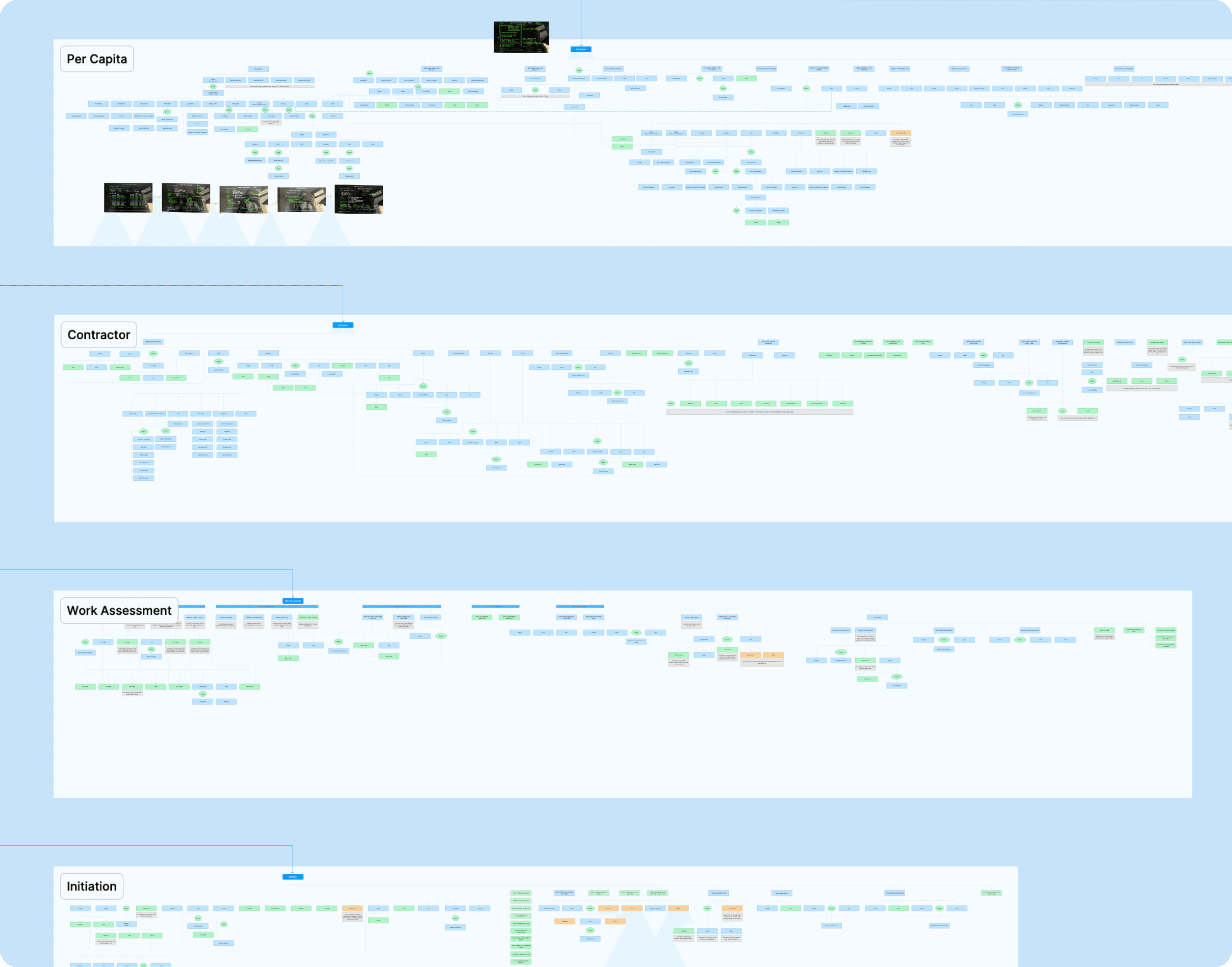
A fraction of the AS400 chaos sitemap.
User Interview Insights
"There are workarounds that are required — compensating for limitations in the system where we have to make calculations or due diligence of checking our work..."
"I key in data all day, every day."
"You have to go to so many different places to put the same information in."
"If I hit the wrong button, it's tragic."
Pain Points | Needs |
|---|---|
|
|
Solutions | Expected Impact |
|---|---|
|
|
Solution
By simply introducing modern paradigms and functionality, the product would streamline users' workflows and ease frustration.
Users could work from a single centralized location whether a table, a member's profile, or a contractor's profile instead of navigating through 10+ screens to find information they needed throughout the AS400.
Information in one part of the system like Funds and Payments would be reflected in another part of the system like the Member Profile Funds and Payments, instead of requiring isolated data entry into both locations.
I created a new sitemap and preliminary wireframes demonstrating what the tool could be.
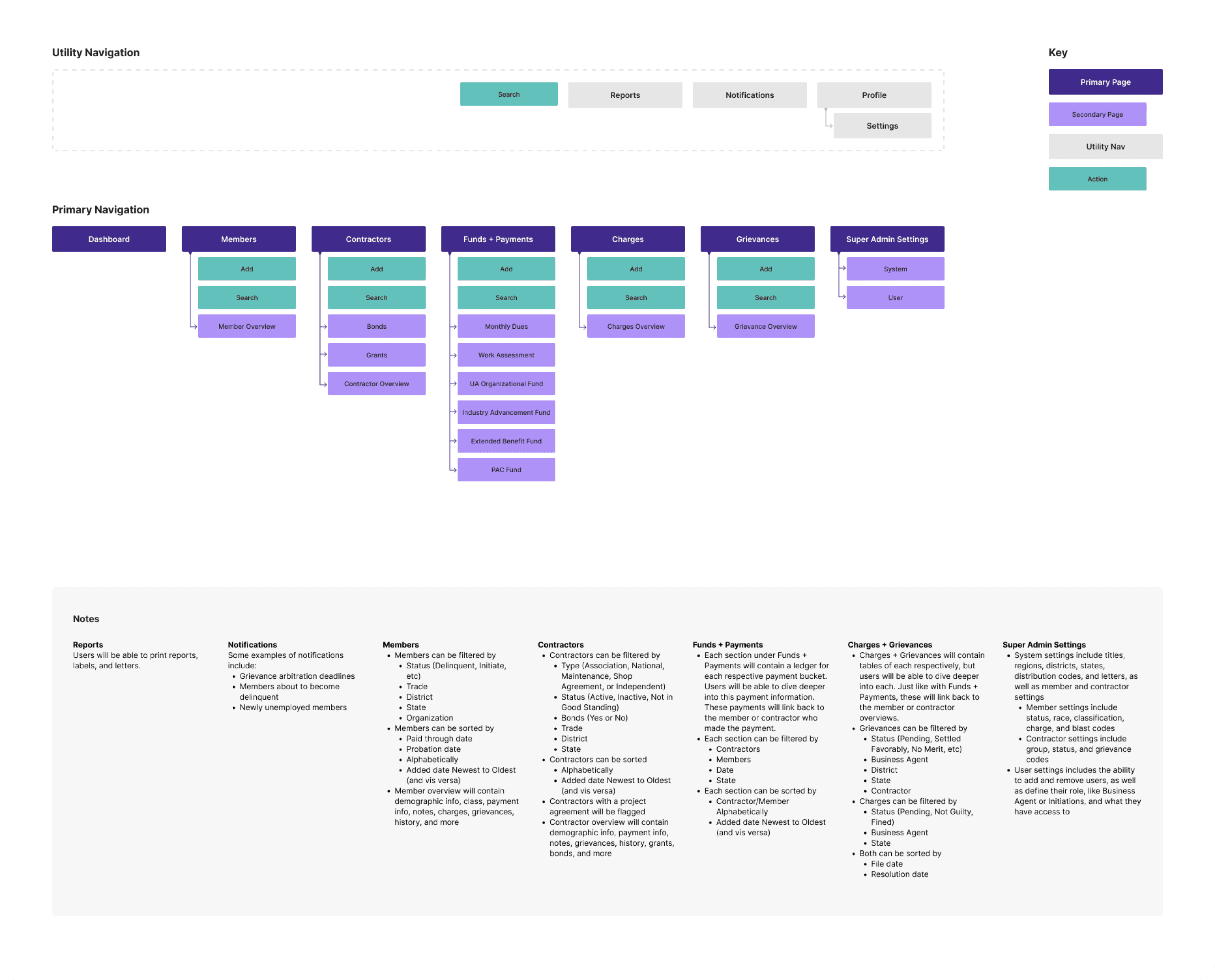
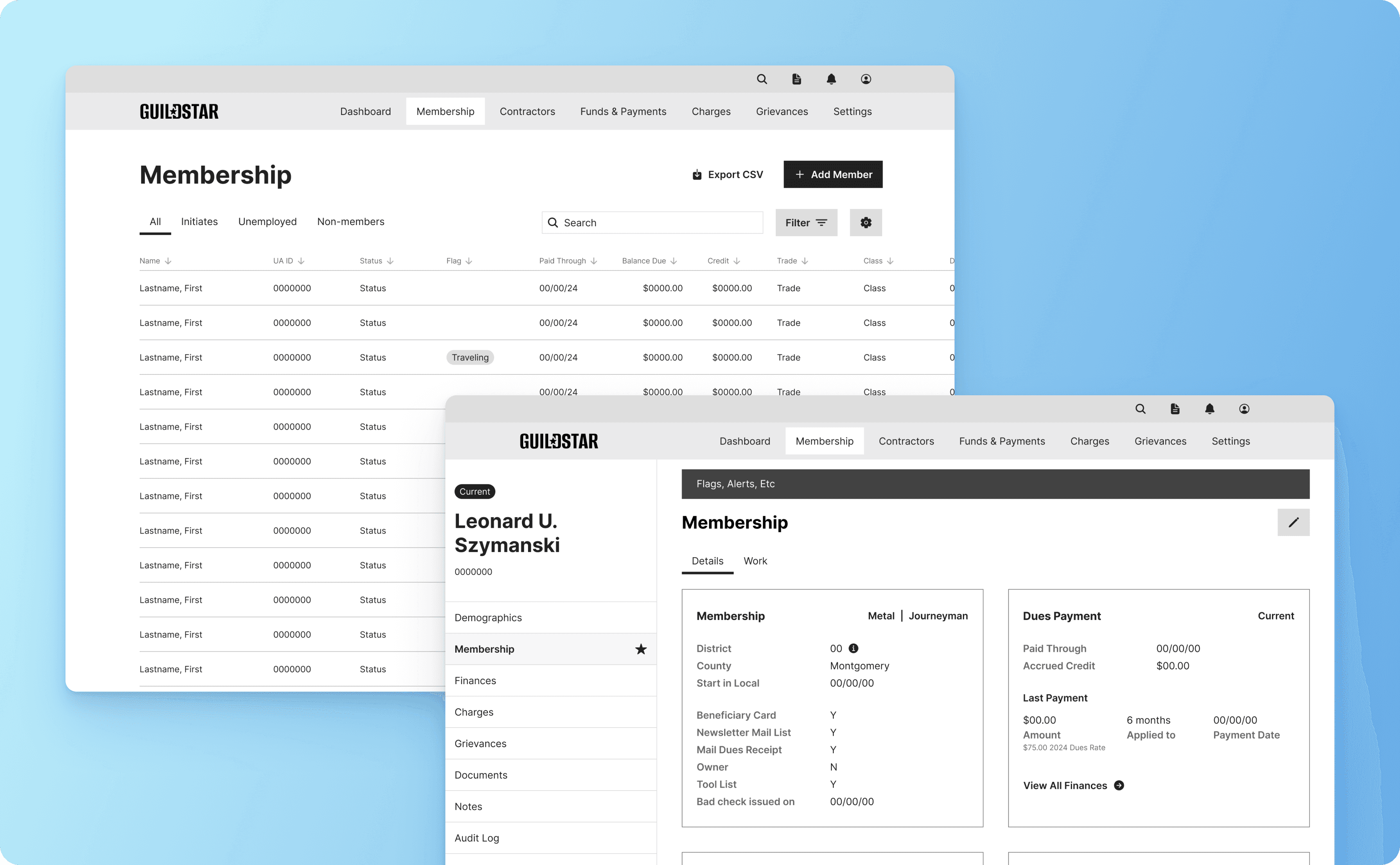
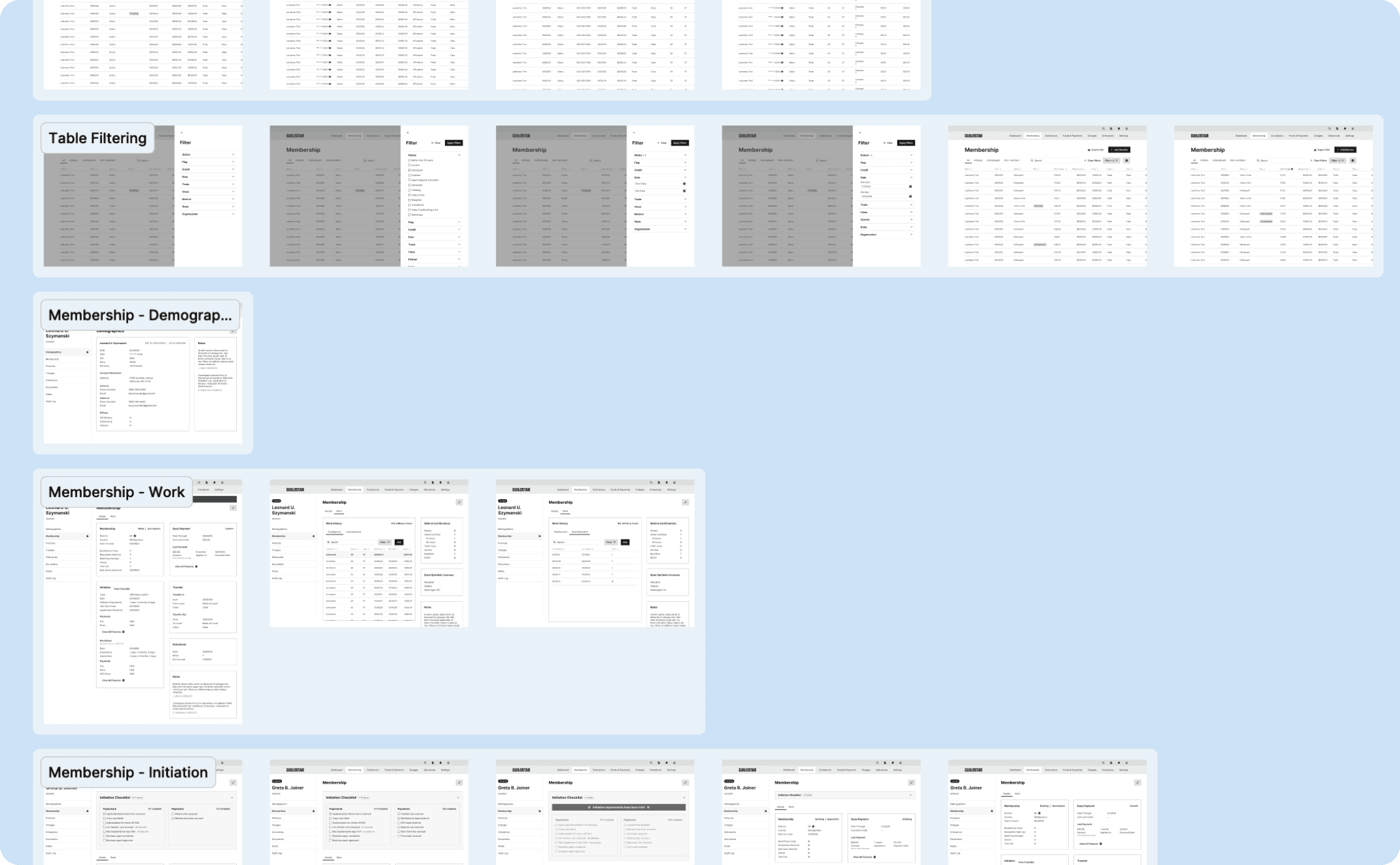
The client was elated with the potential of how much easier their lives would be with the new product. They signed a contract to move forward with the MVP.
MVP Phase
As the team transitioned to the MVP phase, I assisted in user story creation because of my uniquely close understanding of the current AS400 system and user workflows.
I was brought back onto the project near the end of the MVP design work to design the dashboard experience, non-member and unemployment workflows, as well as re-design the Funds & Payments in the member profile.
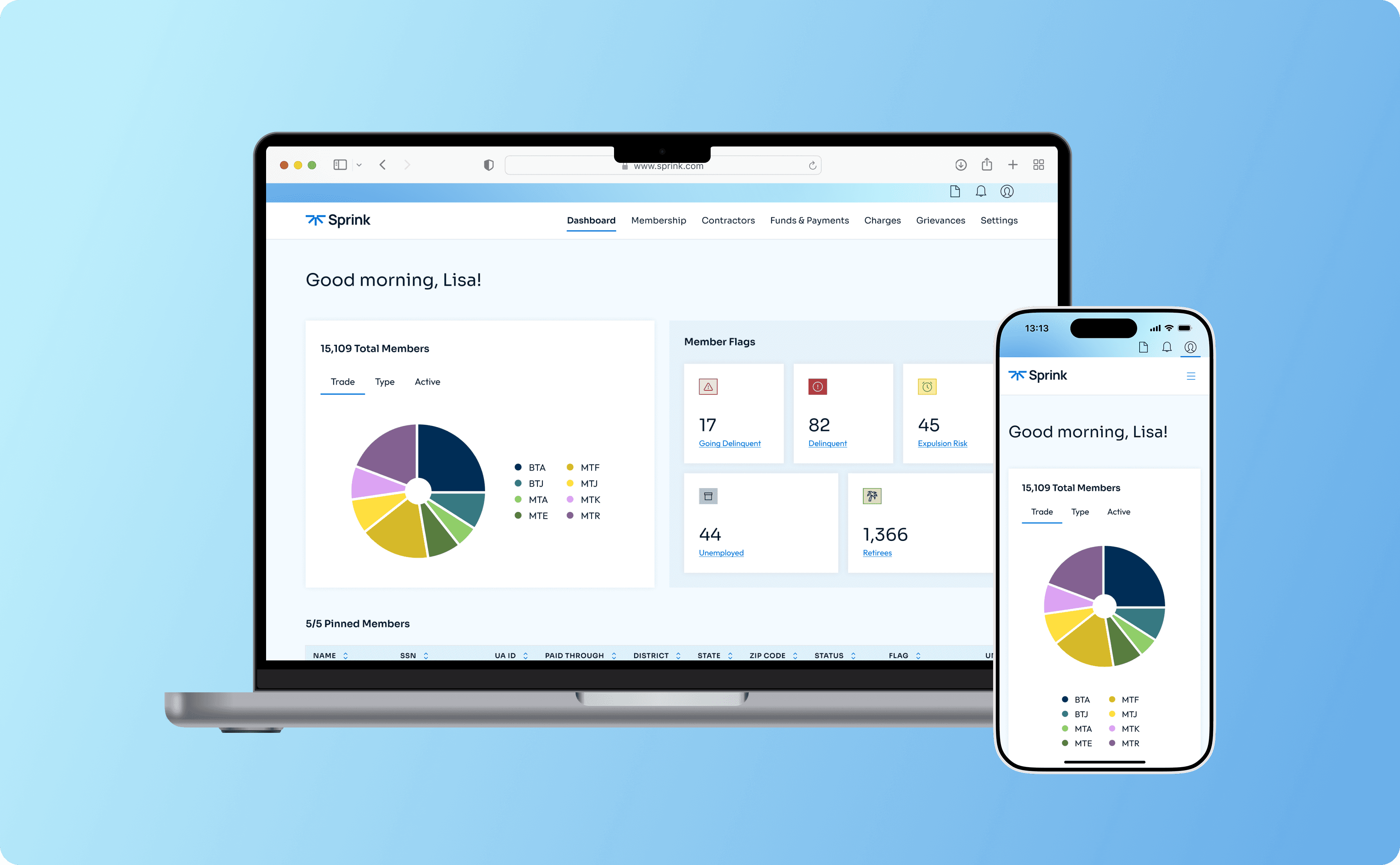
The dashboard would feed the user information they currently needed to seek out through numerous reports down cumbersome workflows. The new functionality would save users hours of time per week.
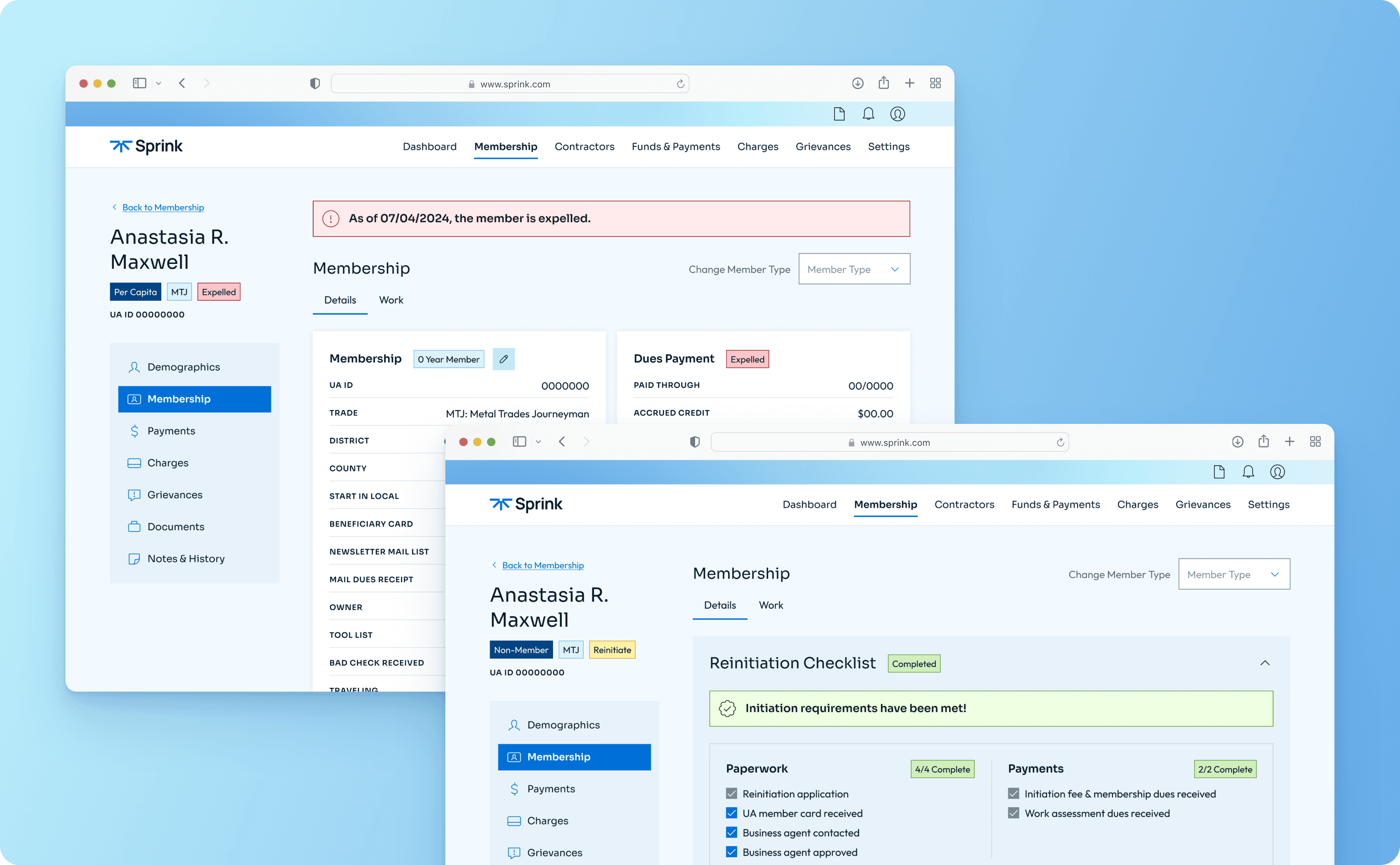
Screens from the non-member workflows.
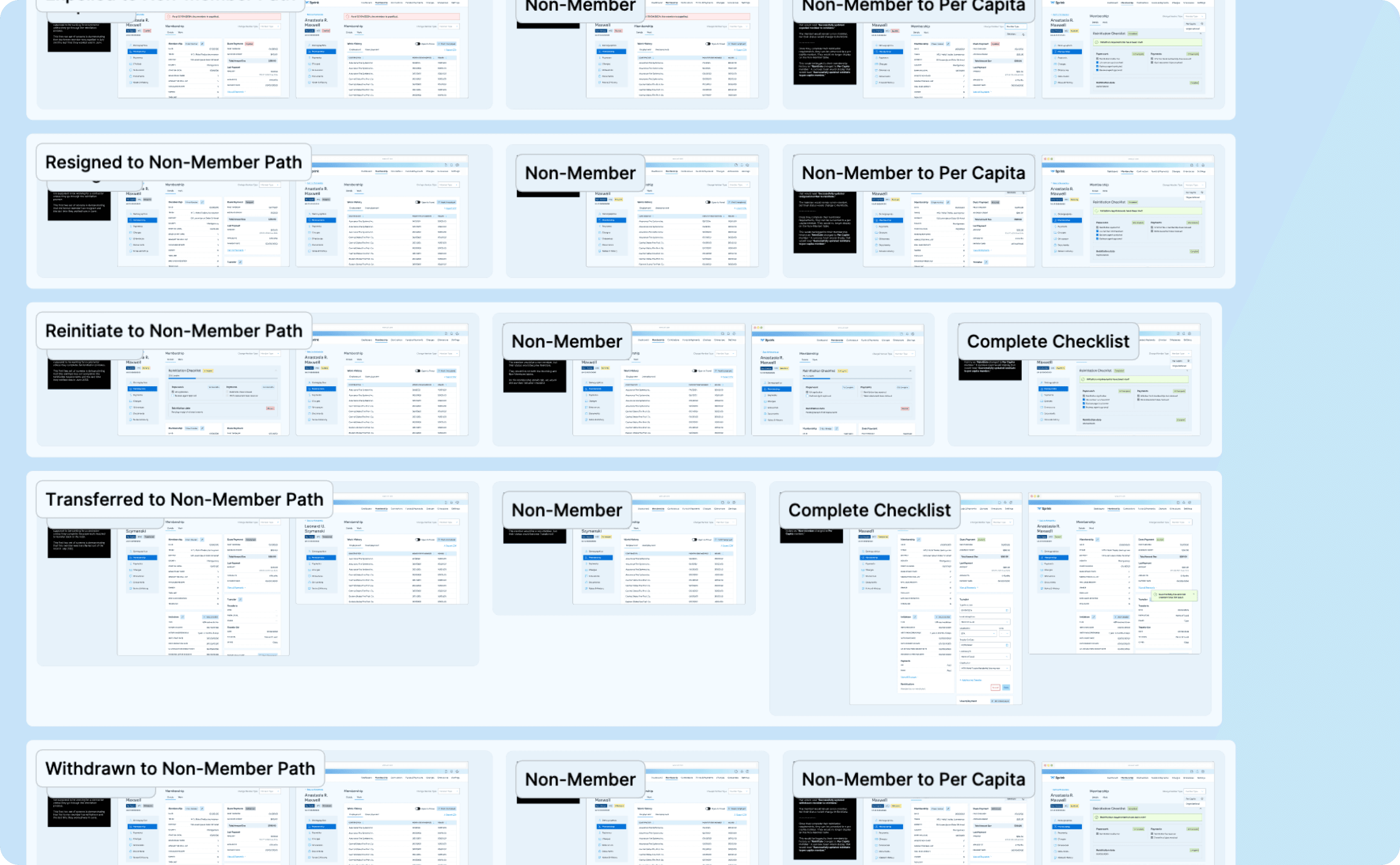
I identified 7 unique non-member use cases to cover all scenarios of how a non-member could exist within the system across the lifecycle of membership.
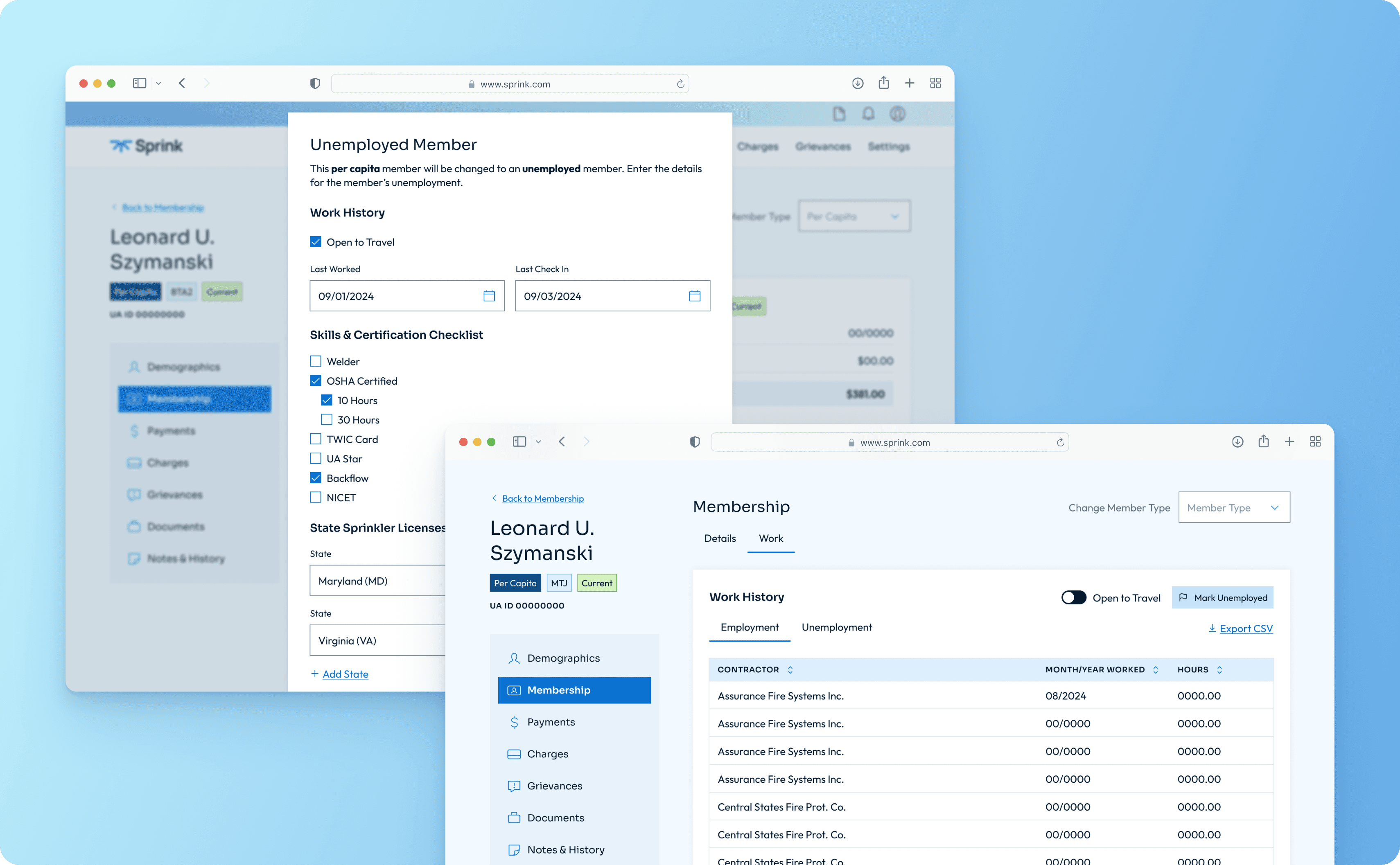
Screens from the unemployment workflows.
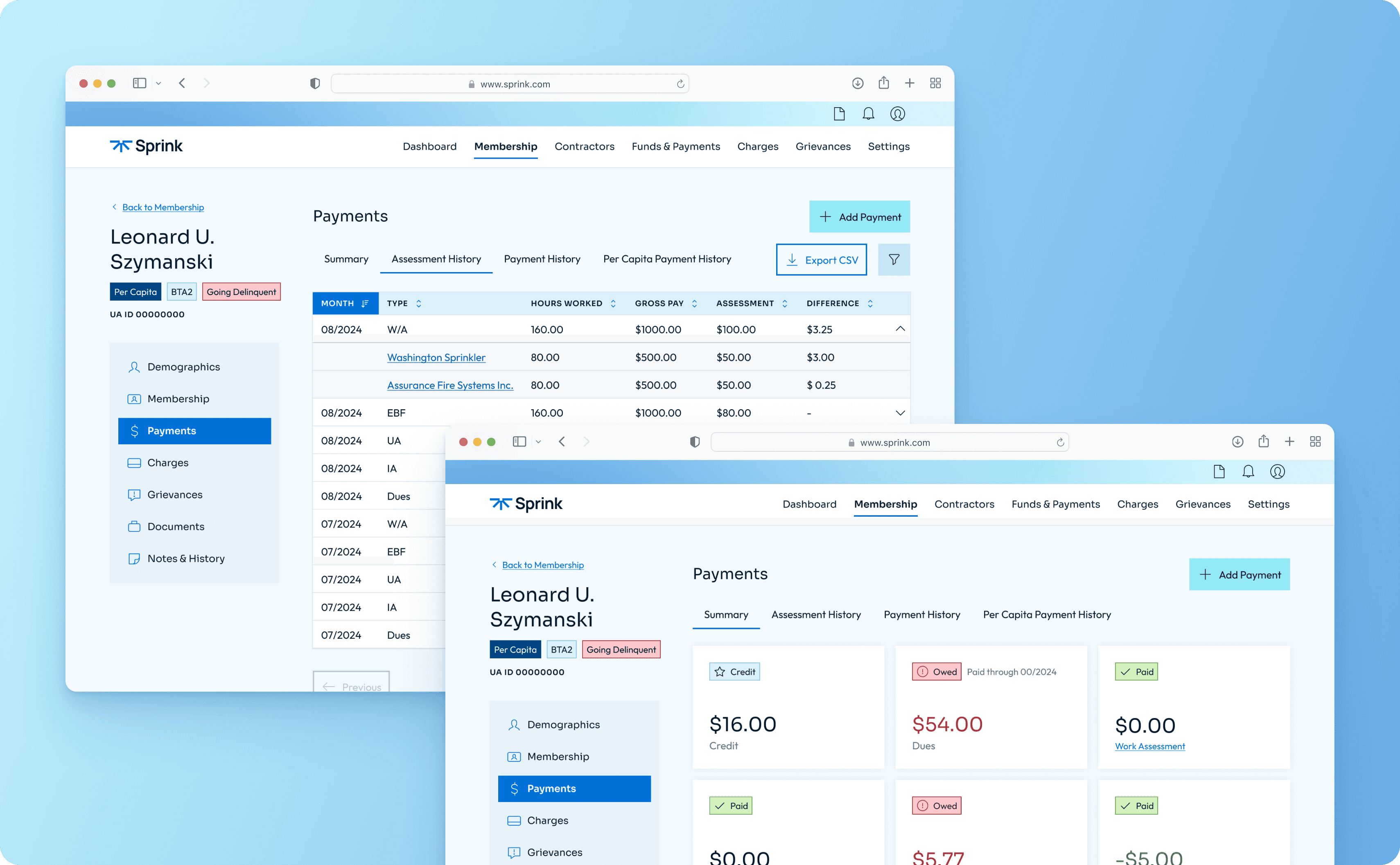
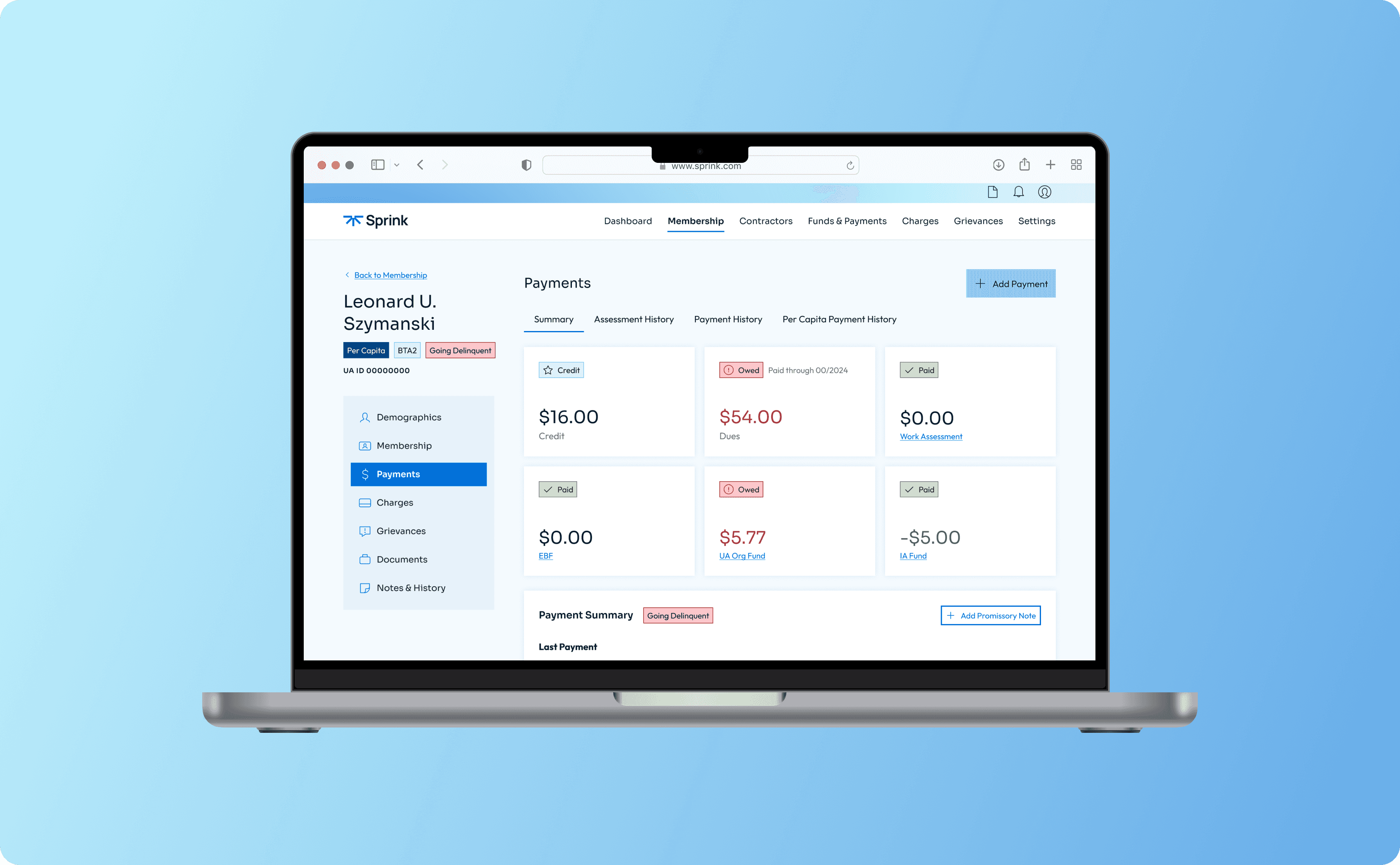
I reduced cognitive load for the user by redesigning member funds & payments to have high-level summary cards that would be easier to understand at-a-glance. Without searching through a table, users could immediately understand a member's standing through badges, color, and icons that conveyed whether or not the user owed money to the union.
Next Steps
If we were able to test the MVP work, I would validate our solutions by:
Surveying users after every work day for a week while using the AS400 prior to launch and while using Sprink post MVP launch to assess user frustration
Tracking time on task for a variety of workflows using the AS400 prior to launch and using Sprink post MVP launch to measure the amount of time saved